Comparing E-commerce Platforms for Future Scalability
A comparative analysis of leading e-commerce platforms focusing on their scalability and suitability for future business growth.
A comparative analysis of leading e-commerce platforms focusing on their scalability and suitability for future business growth.
Comparing E-commerce Platforms for Future Scalability
Hey there, aspiring e-commerce mogul! So, you're looking to build an online store, or maybe you're already running one and feeling the growing pains. That's awesome! But here's the thing: choosing the right e-commerce platform isn't just about getting your products online today. It's about setting yourself up for success tomorrow, next year, and five years down the line. You need a platform that can grow with you, handle increased traffic, more products, new features, and maybe even international expansion. In other words, you need scalability.
Think of it like building a house. You wouldn't build a tiny shack if you plan on having a big family, right? You'd want a foundation that can support extra rooms, maybe a second story, and definitely a strong roof. E-commerce platforms are pretty much the same. Some are great for starting small, but hit a wall when you try to scale. Others are built like fortresses, ready for anything you throw at them, but might be overkill (and over budget) when you're just starting out.
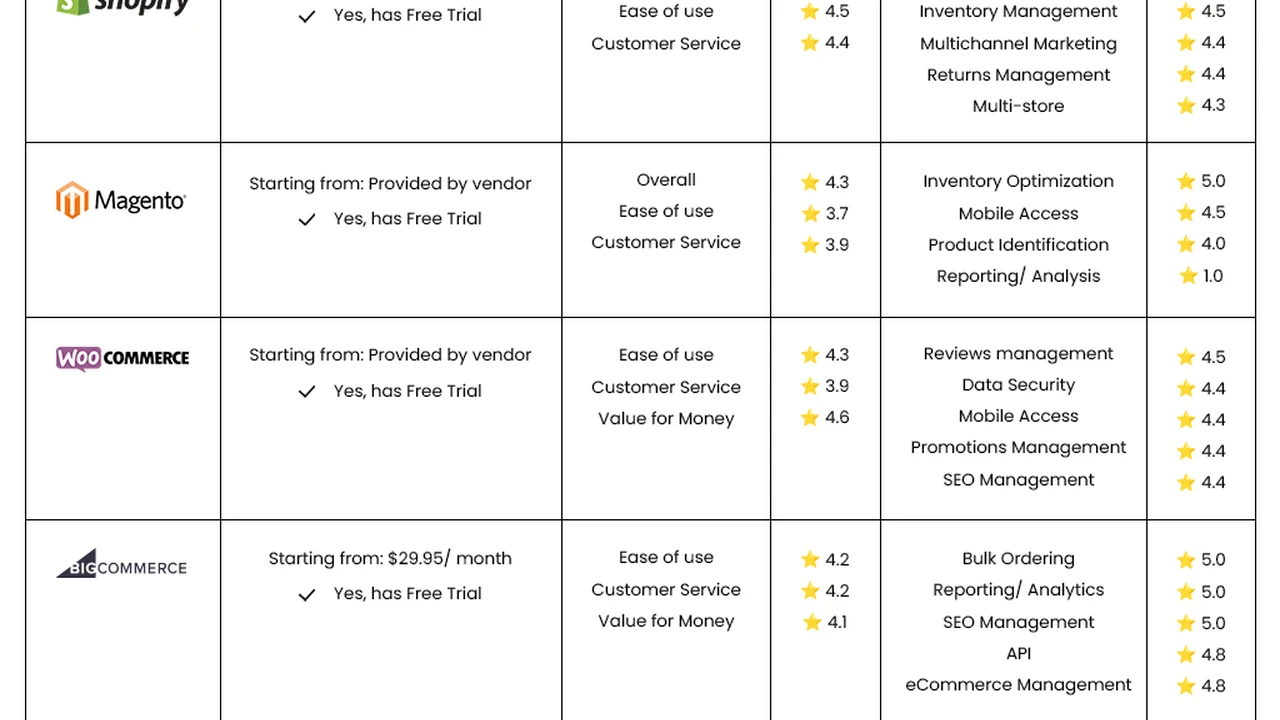
This article is going to dive deep into some of the leading e-commerce platforms out there, specifically looking at how well they handle growth. We'll compare their features, pricing, ease of use, and most importantly, their scalability. We'll also recommend specific products, discuss their use cases, and even touch on pricing so you can make an informed decision for your business, whether you're targeting the bustling US market or the rapidly expanding Southeast Asian economies.
Understanding E-commerce Scalability What It Means for Your Business
Before we jump into specific platforms, let's get clear on what 'scalability' actually means in the context of e-commerce. It's not just about handling more orders. It's a multi-faceted concept:
- Traffic Scalability: Can your platform handle a sudden surge in visitors during a flash sale or holiday season without crashing or slowing down?
- Product Scalability: Can you easily add thousands, or even tens of thousands, of products without performance issues or administrative headaches?
- Feature Scalability: As your business evolves, can you integrate new functionalities like subscriptions, advanced loyalty programs, or complex shipping rules without rebuilding your entire store?
- Geographic Scalability: If you decide to expand from the US to, say, Indonesia or Vietnam, can your platform support multiple currencies, languages, and localized payment gateways?
- Team Scalability: Can multiple team members work on the backend simultaneously without conflicts, and can you easily add new user roles and permissions as your team grows?
- Integration Scalability: How easily can your platform connect with third-party tools for marketing, accounting, CRM, ERP, and other essential business functions?
Ignoring scalability can lead to significant problems down the road: lost sales due to slow loading times, frustrated customers, increased operational costs, and the painful process of migrating to a new platform. So, let's make sure you pick the right one from the start!
Shopify The All Rounder for Growth and Ease of Use
Shopify is often the first name that comes to mind when discussing e-commerce, and for good reason. It's incredibly popular, especially among small to medium-sized businesses (SMBs) and even larger enterprises. Its strength lies in its balance of ease of use, robust features, and impressive scalability.
Shopify's Scalability Features and Use Cases
Shopify is built to scale. From a single product store to a multi-million dollar enterprise, it offers solutions for various stages of growth:
- Traffic Handling: Shopify's infrastructure is designed to handle massive traffic spikes. They boast about their ability to manage Black Friday and Cyber Monday loads without a hitch, which is crucial for any growing business.
- Product Management: You can easily manage thousands of products with variants, collections, and tags. While the basic plans have some limits, Shopify Plus (their enterprise solution) removes virtually all product limits.
- App Store Ecosystem: This is where Shopify truly shines for feature scalability. Its extensive app store offers thousands of integrations for everything from advanced SEO and marketing to dropshipping and customer service. If you need a feature, chances are there's an app for it.
- Internationalization: Shopify Markets (and Shopify Plus's advanced features) make it relatively straightforward to sell globally, supporting multiple currencies, languages, and localized payment options. This is a huge plus for businesses eyeing expansion into Southeast Asia.
- Team Collaboration: Shopify allows for multiple staff accounts with customizable permissions, making it easy to onboard new team members as your business grows.
Recommended Shopify Products and Pricing
Shopify offers several plans, each catering to different stages of business growth:
-
Shopify Basic:
- Use Case: Perfect for new businesses or those with a small product catalog and moderate sales volume. It gives you all the essentials to get started.
- Price: Starts around $39/month (billed annually, it's often cheaper). Transaction fees apply if you don't use Shopify Payments.
- Scalability Note: Great for initial growth, but you might hit limits on staff accounts or advanced reporting as you expand.
-
Shopify (Standard):
- Use Case: Ideal for growing businesses with increasing sales, needing more staff accounts, and better reporting.
- Price: Around $105/month. Lower transaction fees than Basic.
- Scalability Note: A solid mid-range option that can handle significant growth before needing an upgrade.
-
Shopify Advanced:
- Use Case: For larger businesses with high sales volume, requiring advanced reporting, third-party calculated shipping rates, and lower transaction fees.
- Price: Around $399/month. Even lower transaction fees.
- Scalability Note: Designed for high-growth businesses pushing significant volume.
-
Shopify Plus:
- Use Case: Enterprise-level solution for very large businesses, high-volume brands, and those needing custom solutions, dedicated support, and headless commerce capabilities. Think multi-million dollar annual revenue.
- Price: Starts at approximately $2,000/month and can go much higher depending on sales volume and customization.
- Scalability Note: This is Shopify's ultimate scalability solution, offering unparalleled performance, customization, and support for global expansion and complex operations.
WooCommerce The Flexible Open Source Powerhouse for WordPress Users
If you're already familiar with WordPress or prefer an open-source solution that gives you maximum control, WooCommerce is a fantastic choice. It's not a standalone platform but a powerful plugin that turns any WordPress site into a fully functional e-commerce store.
WooCommerce's Scalability Features and Use Cases
WooCommerce's scalability is directly tied to your hosting environment and your technical expertise. This can be both a blessing and a curse:
- Traffic Handling: This depends entirely on your web hosting. With a robust, scalable hosting provider (like WP Engine, Kinsta, or AWS), WooCommerce can handle immense traffic. On shared hosting, you'll quickly hit limits.
- Product Management: WooCommerce can manage an unlimited number of products, categories, and attributes. Its flexibility allows for highly complex product configurations.
- Plugin Ecosystem: Similar to Shopify's app store, WordPress has a vast ecosystem of plugins (many free, many premium) that extend WooCommerce's functionality. This offers incredible feature scalability.
- Internationalization: With plugins like WPML and various currency switchers, WooCommerce can be configured for global sales, though it might require more manual setup than Shopify.
- Team Collaboration: WordPress's user role system allows for granular control over who can do what, making it suitable for growing teams.
- Customization: This is WooCommerce's biggest strength. Because it's open-source, you have complete control over the code, allowing for virtually limitless customization to meet unique business needs.
Recommended WooCommerce Products and Pricing
WooCommerce itself is free. However, the 'products' you'll need to consider are premium plugins, themes, and crucially, hosting.
-
WooCommerce Core Plugin:
- Use Case: The foundation for any WordPress e-commerce store. Essential for product listings, cart, checkout, and order management.
- Price: Free.
- Scalability Note: Provides the basic framework; scalability comes from hosting and extensions.
-
Premium WooCommerce Extensions:
- Use Case: For adding advanced features like subscriptions (WooCommerce Subscriptions, ~$199/year), advanced shipping (WooCommerce Shipping, free with some carriers, or premium extensions), payment gateways (many free, some premium), or specific marketing tools.
- Price: Varies widely, from free to several hundred dollars per year per extension.
- Scalability Note: These extensions allow you to add complex functionalities as your business grows without needing to switch platforms.
-
Managed WordPress Hosting (e.g., WP Engine, Kinsta, SiteGround):
- Use Case: Crucial for WooCommerce scalability. These hosts optimize their servers specifically for WordPress and WooCommerce, offering better performance, security, and dedicated support.
- Price: Starts from around $30/month for basic plans, scaling up to hundreds or thousands for high-traffic enterprise solutions.
- Scalability Note: Your hosting is the backbone of your WooCommerce store's ability to handle traffic and maintain speed as you grow. Invest here!
-
Premium WordPress Themes (e.g., Astra, GeneratePress, Storefront):
- Use Case: Provides the design and layout for your store. Premium themes often come with better optimization, more customization options, and dedicated support.
- Price: Typically a one-time fee of $50-$100 or an annual subscription for updates and support.
- Scalability Note: A well-coded, lightweight theme contributes to faster loading times, which is essential for a scalable store.
Magento Adobe Commerce The Enterprise Solution for Complex Needs
When you hear 'Magento,' think enterprise. Now known as Adobe Commerce, this platform is designed for large businesses with complex requirements, extensive product catalogs, and a need for deep customization and integration. It's not for the faint of heart or those on a tight budget, but its power is undeniable.
Magento's Scalability Features and Use Cases
Magento is built from the ground up for extreme scalability and flexibility:
- Traffic Handling: With proper server configuration and optimization, Magento can handle millions of visitors and transactions. It's used by some of the world's largest brands.
- Product Management: Unlimited products, complex product types (bundles, configurable products), advanced pricing rules, and robust inventory management are standard.
- Feature Scalability: Its open-source nature (for Magento Open Source) and extensive marketplace of extensions allow for virtually any feature you can imagine. Adobe Commerce adds even more built-in enterprise features.
- Internationalization: Magento excels here, with native support for multiple stores, languages, currencies, and tax rules, making it ideal for global expansion, especially into diverse markets like Southeast Asia.
- Team Collaboration: Advanced user roles and permissions, along with robust backend management, support large teams and complex workflows.
- Headless Commerce: Magento is a leader in headless commerce, allowing you to decouple the front-end (what customers see) from the back-end (the e-commerce engine). This offers ultimate flexibility for creating unique customer experiences across various touchpoints (web, mobile app, IoT devices).
Recommended Magento Products and Pricing
Magento comes in two main flavors:
-
Magento Open Source (formerly Magento Community Edition):
- Use Case: For technically proficient businesses or those with development teams who need maximum control and customization without the enterprise price tag. It requires significant technical resources for setup, maintenance, and scaling.
- Price: Free to download and use. However, you'll incur costs for hosting, development, themes, extensions, and ongoing maintenance. These costs can quickly add up to thousands or tens of thousands of dollars annually.
- Scalability Note: Highly scalable, but its performance and stability are directly dependent on the quality of your hosting, development, and optimization efforts.
-
Adobe Commerce (formerly Magento Enterprise Edition):
- Use Case: For large enterprises with complex business logic, high sales volumes, and a need for advanced features like B2B functionality, AI-powered product recommendations, cloud hosting, and dedicated support.
- Price: This is where it gets serious. Pricing is custom and typically starts in the tens of thousands of dollars per year, scaling up based on Gross Merchandise Value (GMV) and specific feature requirements.
- Scalability Note: The pinnacle of e-commerce scalability, offering a fully managed, high-performance cloud environment with enterprise-grade features and support.
BigCommerce The SaaS Alternative for Enterprise Scalability
BigCommerce positions itself as an enterprise-grade SaaS (Software as a Service) platform, offering many of the powerful features of Magento but with the ease of use and managed hosting benefits of a platform like Shopify. It's a strong contender for businesses that are growing rapidly and need robust features without the complexity of self-hosting.
BigCommerce's Scalability Features and Use Cases
BigCommerce is designed for growth, offering a powerful platform that can handle significant scale:
- Traffic Handling: As a SaaS platform, BigCommerce manages all the hosting infrastructure, ensuring high uptime and performance even during peak traffic. They are built for enterprise-level traffic.
- Product Management: Unlimited products, variants, and categories are standard across all plans. It handles large catalogs with ease.
- Built-in Features: BigCommerce prides itself on offering more built-in features than many competitors, reducing the reliance on third-party apps. This includes advanced SEO, marketing tools, and robust shipping options.
- Internationalization: Strong multi-currency and multi-language capabilities, along with integrations for global payment gateways, make it suitable for international expansion.
- Headless Commerce: BigCommerce is also a strong player in headless commerce, offering APIs that allow businesses to create custom front-end experiences while leveraging BigCommerce's powerful back-end.
- B2B Functionality: Offers robust B2B features out-of-the-box, which is a significant advantage for businesses selling to other businesses.
Recommended BigCommerce Products and Pricing
BigCommerce offers tiered plans similar to Shopify, but with a focus on providing more features natively.
-
BigCommerce Standard:
- Use Case: Good for new or small businesses with moderate sales volume. Provides essential e-commerce features.
- Price: Starts around $39/month. Note that BigCommerce plans have annual sales thresholds; if you exceed them, you're automatically upgraded to the next tier.
- Scalability Note: A solid starting point, but the sales threshold means you'll naturally scale up to higher plans as your business grows.
-
BigCommerce Plus:
- Use Case: For growing businesses needing more advanced marketing tools, customer groups, and abandoned cart saver features.
- Price: Around $105/month. Higher sales threshold.
- Scalability Note: Offers more robust features for businesses experiencing significant growth.
-
BigCommerce Pro:
- Use Case: For larger businesses with high sales volume, requiring advanced analytics, custom SSL, and faceted search.
- Price: Around $399/month. Even higher sales threshold.
- Scalability Note: Designed for high-volume businesses that need enterprise-level features without the full complexity of a custom build.
-
BigCommerce Enterprise:
- Use Case: For very large businesses, high-volume brands, and those needing custom pricing, dedicated account management, API support, and priority support.
- Price: Custom pricing, typically starting in the thousands of dollars per month, similar to Shopify Plus.
- Scalability Note: BigCommerce's ultimate solution for maximum scalability, performance, and customization for the largest online retailers.
Choosing Your E-commerce Platform for Long Term Success
So, how do you pick the right one for your business, especially with an eye on future growth in markets like the US and Southeast Asia?
- For Startups and SMBs Prioritizing Ease of Use and Quick Launch: Shopify is often the best bet. Its user-friendly interface, extensive app store, and managed hosting make it easy to get started and scale up without deep technical knowledge. If you're in the US and want to quickly test a product, or in Southeast Asia and need a reliable platform without local development headaches, Shopify is a strong contender.
- For Businesses with Existing WordPress Sites or Technical Expertise: WooCommerce offers unparalleled flexibility and control. If you already have a WordPress blog with a strong audience, integrating WooCommerce can be seamless. However, remember that you're responsible for hosting, security, and performance, which requires more technical know-how or a good development partner. This can be a cost-effective scalable solution if you have the right team.
- For Rapidly Growing Businesses Needing Enterprise Features without Self-Hosting: BigCommerce is an excellent choice. It offers many of the advanced features typically found in enterprise solutions but in a managed SaaS environment. Its strong B2B capabilities and headless commerce options make it very attractive for businesses with complex needs looking to scale aggressively.
- For Large Enterprises with Complex, Unique Requirements and Significant Budget: Magento (Adobe Commerce) is the powerhouse. If you need absolute control, deep customization, and have the resources for development and maintenance, Magento can handle virtually anything. It's often chosen by global brands with multi-country operations and highly specific business logic.
Consider your current needs, your projected growth over the next 3-5 years, your budget, and your team's technical capabilities. Don't just pick the cheapest option today; think about the total cost of ownership and the potential for lost revenue if your platform can't keep up with your success. The right platform isn't just a tool; it's a strategic partner in your e-commerce journey. Happy selling!
:max_bytes(150000):strip_icc()/277019-baked-pork-chops-with-cream-of-mushroom-soup-DDMFS-beauty-4x3-BG-7505-5762b731cf30447d9cbbbbbf387beafa.jpg)